Angel
Thesis Studio | Spring 2024


Golden hours are vital after a disaster event. Improving the efficiency + accessibility of search and rescue technology
will amplify civilian-based recovery efforts.
218 million people are impacted by disaster worldwide, which triggers the need for humanitarian aid in disproportionately affected locations.

The Post-Disaster Environment
Above Rubble
The initial stages of search and rescue assess types of collapse and potential victim locations.
Below Rubble
After the arrival of international teams, deep voids can be reached with heavier equipment.


Types of Structural Collapse
Inclined
Columns and walls collapse into an incline.
Overhang
Higher parts of the building hang over the lower part.
Overturn
Parts or all of a building fell to the side.
Heap
Some floors, columns and walls have collapsed into a rubble heap.
Pancake
Complete collapse of floors on top of each other.
This creates various challenges for both victim and rescuer.

Disaster response comes in two waves, but efforts are inhibited by geography, available technology, and the rush against time.

International Response
Local Response

Race against the Golden Hours. [Post-Disaster Hours 0-24]

How do first-responders approach the Golden Hours?


Concept Exploration
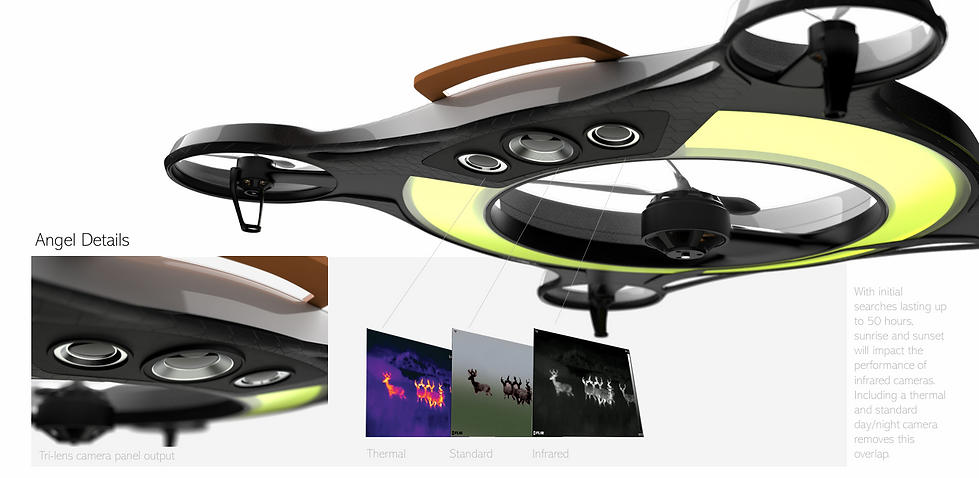
Considering the challenges both above and below the rubble, a design that was efficient and hands-free to allow the rescuer to move freely during the search proved most crucial.

Concept Refinement + CMF Considerations
Angel. Civilian Disaster Response.